
Piano Tuner in San Carlos, CA for Better Sound & Pitch

Lessons, recitals, and everyday practice all go better on a piano that sounds in tune. As a piano tuner in San Carlos, CA, Bay Piano Tuner serves students, teachers, and families with grands, uprights, and spinets. Each string is brought to pitch by ear and electronic measurement together. Humidity swings can pull pianos off pitch.

Get in touch

Professional Piano Tuning for Consistent Pitch

Piano tuning adjusts the tension of the strings so the notes sit at the intended pitch and work together musically. Over time, strings can drift as the piano responds to humidity, temperature, and normal use. I set the temperament through the middle of the keyboard, then tune outward while matching unisons and octaves. Tuning addresses pitch, while issues with touch or tone may require separate piano services.

Grand Piano Tuning in San Carlos, CA

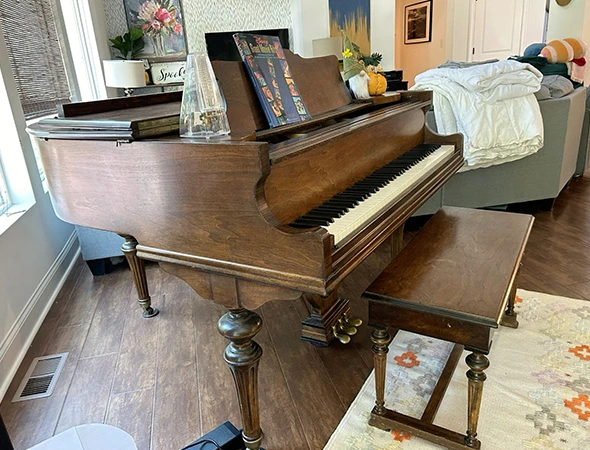
A baby grand and a seven-foot grand may need different tuning approaches because their string lengths, scaling, and tonal characteristics differ. Shorter bass strings on smaller grands can produce overtones that affect how their octaves are judged, while longer strings on larger models can respond differently. That’s why every grand I tune here in San Carlos, where I’m based, gets its stretch set by listening to that particular instrument.

I open the piano as needed to reach the tuning pins comfortably, then return the removable parts to their proper positions when the work is finished. Before I finish, you’ll hear wide chords spanning the keyboard, which show whether the bass and treble agree with the middle. On a grand, those long-range octaves are where an unsuitable stretch can become noticeable. Done well, the bass should sound full, and the top should ring clearly without turning shrill.

Our Services

Piano Services for Sound, Touch & Performance

A tuning sounds its best on a piano that plays and responds well. These complete services take care of the mechanical and tonal issues a tuning can reveal but not fix.

Piano Technician

Sometimes a tuning turns up something else, like a rattle from a loose part or a note that won't stay put. Technician work covers those findings, and I explain what each one means for your piano. That way, a mechanical issue doesn't undermine the result of an otherwise careful tuning.

Piano Repair Services

Old strings occasionally break during a tuning, especially when a piano is brought up from below pitch. If one does, my repair work covers replacing or splicing it so the note isn't left silent. You should finish with every note playing again, not a gap in your scales.

Piano Voicing Service

Once every string is in tune, tone differences that were hiding behind sourness become easier to hear. If certain notes now stand out as glassy or dull, voicing adjusts the hammer felt to bring them in line. You'll hear from me whether that's worth doing or best left alone.

Grand Piano Regulation

Fresh pitch doesn't fix a keyboard that feels patchy under your fingers. Grand piano regulation sets key height, hammer timing, and repetition so the action responds more consistently. Pairing it with my tuning gives you a piano that both sounds right and responds more predictably when you play.

Piano Tuner

A recital, a holiday gathering, or a home recording is a natural reason to book a tuning. Planning the visit around your date gives me time to bring the whole piano into clean agreement without rushing. The result is a piano ready for the moment it matters.

Benefits Of Choosing My Piano Tuning Service

Booking your tuning with Bay Piano Tuner brings advantages you’ll notice at the keyboard:

  • Experienced With Concert Pianos:
    Concert grands for professional players are part of my tuning experience. Your home piano gets careful attention to pitch, intervals, unisons, and tonal balance, whatever its size.
  • Consistent Tuning Style:
    The same ear tunes your piano each visit, so its sound stays recognizable from one appointment to the next. You won’t hear a different technician’s habits every time.
  • Avoid Big Pitch Raises:
    Regular tuning keeps your piano closer to its intended pitch. That can reduce the chance of needing a substantial pitch correction later, along with the additional work involved in bringing a neglected piano back toward standard pitch.
  • Easier Singing Practice:
    Singers who rehearse at the piano rely on accurate pitch to train their ear. A tuned instrument keeps vocal practice from drifting along with it.
  • Quick Questions Welcome:
    If one note slips between appointments, a text describing it lets me tell you whether it can wait. Small concerns don’t have to turn into guesswork.
  • Listening Tips Shared:
    If you’d like, I can play an out-of-tune unison next to a clean one on your own piano. Knowing that sound helps you judge when the next tuning is due.

Work Process

A Clear Look at the Tuning Process

Here’s how a tuning appointment goes once I arrive.

Quick Listen First

A few notes and chords tell me how far the piano has drifted and whether it needs a pitch raise or a standard tuning. I'll explain what I'm hearing before any pins are turned.

Tuning the Strings

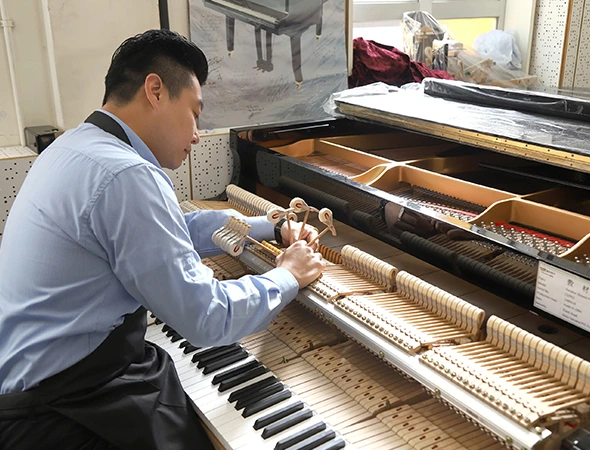
The lid and other access points are opened as needed so the tuning pins are within reach. Most of the visit is spent here, turning pins in small amounts and listening closely to each change.

Your Turn to Play

Once the strings are set, you sit down and play something familiar. Your favorite piece is the fairest test of whether the tuning sounds right to you.

Upright Piano Tuning in Menlo Park, CA

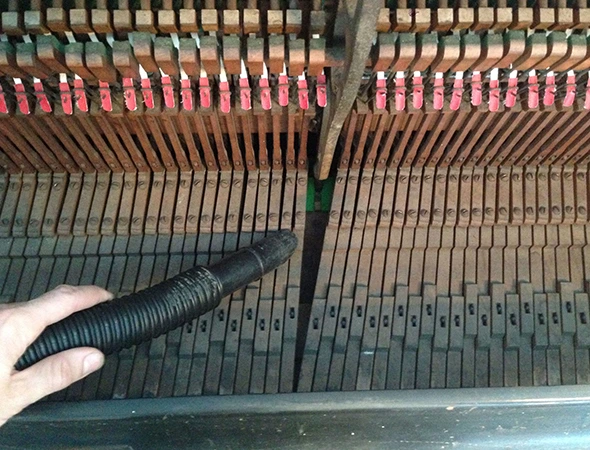
Uprights, consoles, and spinets are everyday instruments in many homes, and they hold a tuning best when the pins grip firmly. On an upright, the top lid opens, and the front panel comes off as needed so the tuning pins and strings are within reach. As I turn each pin, I can feel how tightly the pinblock holds it, which tells me a lot about how the tuning may hold.

Loose pins on an older Menlo Park upright don’t always mean bad news. Some hold fine once set carefully, while others slip enough that the piano drifts soon after tuning. I’ll tell you what I’m finding rather than treating every loose-feeling pin the same way. For an upright used mostly for lessons, a stable tuning also keeps a student’s ear learning the right intervals.

Piano Pitch Correction in Belmont, CA

A piano can sound pleasant on its own and still be out of step with everything else. If it has sagged a little flat overall, a violin, a guitar, or the backing track you practice with can clash with it, even though the piano agrees with itself. Pitch correction brings the whole instrument back toward a shared standard, usually A440, where the A above middle C is set to 440 Hz.

Standard pitch isn’t always the right call, though. Very old pianos with fragile strings or a tired pinblock may be safer settled slightly below A440, and I’ll talk that through with you before turning a single pin. On my Belmont visits, we can discuss the appropriate target for your piano and how that choice affects playing with other instruments.

Piano Pitch Raise Services in Stanford, CA

Pitch is measured in cents, with 100 cents to a half step, and a long-neglected piano can sit dozens of cents flat. That can happen to a piano that sat silent through a move, a long absence, or a change of owners. Bringing a badly flat piano back to standard pitch in one step can put significant additional tension on old strings and reveal weaknesses in the instrument, so I assess its condition before deciding how to approach the raise.

On a Stanford-area pitch raise, my first pass lifts the strings closer to the intended target. Even at that stage, the piano can sound far sweeter than its sour starting point. After a substantial pitch raise, the strings may settle as they adjust to the new tension, so a follow-up tuning is sometimes needed to stabilize the piano closer to the intended pitch.

Fine Piano Tuning in Woodside, CA

Fine tuning is for players who hear the small things, like a major third that shimmers unevenly or an octave that feels a hair wide. In a well-tuned piano, the slight waver in each major third speeds up steadily as you climb the keyboard, and octaves sound settled rather than restless. Those details matter most when you’re recording, playing chamber music, or simply listening closely.

Electronic readings get each string close, then my ear checks the result interval by interval, playing thirds, sixths, and full chords until the progression sounds smooth. Each pin gets small, firm movements from my tuning lever so the pitch remains stable under stronger playing, not only during a gentle test. For a Woodside piano, that pairing is what I mean by fine-tuning.

Questions About Getting Your Piano Tuned

Age alone rarely rules a piano out. What matters most is whether the tuning pins still grip the pinblock firmly enough to hold. Many older pianos tune well, though some are safer kept a little below standard pitch. After assessing the pins and the instrument's condition, I can tell you what I expect from the tuning.

Put Your Piano Back in Tune

Send a text to (650) 438-8334 saying whether you have a grand, upright, or spinet, along with a few days that suit your schedule. Calls work at that number too, and crh@ichaz.com is there for email.

Call: (650) 438-8334
Email: crh@ichaz.com

Send A Message

About Bay Piano Tuner

Bay Piano Tuner brings hands-on experience in piano tuning, pitch correction, repair, voicing, and regulation to each service visit. I work with grands, uprights, and spinets, adjusting the instrument according to its condition, construction, and playing demands. From routine tuning to a piano that has fallen significantly below pitch, I listen carefully, assess the instrument, and explain what I find before moving forward.

Tuning Calls Throughout These Towns

San Carlos is the town where I tune most often, and regular visits also reach the communities listed below. Staying within these nearby areas makes it simpler to keep your piano on a steady tuning schedule with someone who knows it.