
Grand Piano Regulation in San Carlos, CA for Smoother Key Response

Uneven trills, sluggish repetition, and a mushy touch often mean a grand’s action has drifted. Regulation resets the dozens of small measurements behind every keystroke. Students, teachers, and advancing players can get grand piano regulation in San Carlos, CA, through Bay Piano Tuner. A well-regulated action lets your fingers control each note more consistently.

Get in touch

What’s Involved in Grand Piano Regulation?

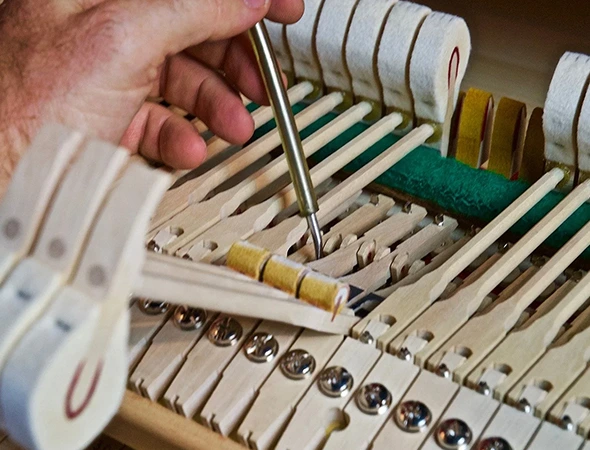
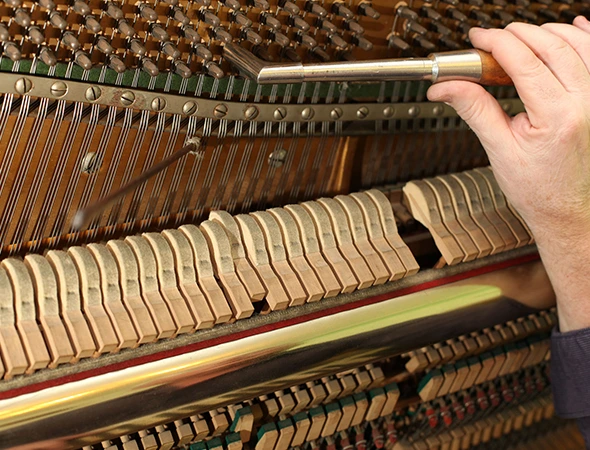
Grand piano regulation is the adjustment of the action, the mechanism that turns a keystroke into a hammer blow. Felt, cloth, leather, and other action materials compress with use, while wood and other components can shift over time, so the touch gradually changes. I adjust those relationships through a sequence of regulation steps, including key dip, hammer blow distance, and let-off, the point where the hammer escapes before striking. This fine-tunes working parts, so badly worn or damaged components may need repair first.

Grand Piano Action Regulation in San Carlos, CA

Many players don’t notice their grand’s action slipping because the change happens gradually and their hands quietly adapt. The difference often becomes obvious when a teacher’s piano or a recital instrument feels lighter, crisper, or easier to control than the one at home. If your grand feels unusually hard to play, the action is a good place to look.

When I perform an action regulation on your San Carlos grand, the adjustments follow an organized sequence, since many settings depend on the ones before them. Key height and key dip need to work together, as do hammer blow distance and let-off. The whole keyboard gets attention, not just the few notes that bother you, which is why I don’t rush a complete regulation. Once finished, your grand should feel familiar again, with a more consistent response from note to note.

Our Services

Piano Services for Sound, Touch & Performance

A regulated action works best on a piano that’s otherwise healthy. These services address the tone, pitch, and mechanical problems that regulation alone can’t reach.

Piano Technician

Before investing in a full regulation, it helps to know whether the action parts are still suitable for adjustment. A technician visit from me looks for worn hammer knuckles, loose flange screws, keys that wobble on their bushings, and other conditions that can limit the result. You'll know whether regulation can hold or what needs attention first.

Piano Repair Services

Drift isn't the only action problem; some parts simply break. A snapped repetition spring, a split flange, or a broken hammer shank needs repair or replacement before adjustment can restore proper movement. I handle those repair needs first when necessary, so the regulation isn't being performed on damaged components.
Piano Voicing Service

A freshly regulated action can change how a piano sounds because hammers are now traveling and striking more consistently. Notes that seemed fine before may sound slightly different once the action is corrected. Voicing afterward lets me address those tonal differences and bring the sound into better balance with the new touch.
Grand Piano Regulation

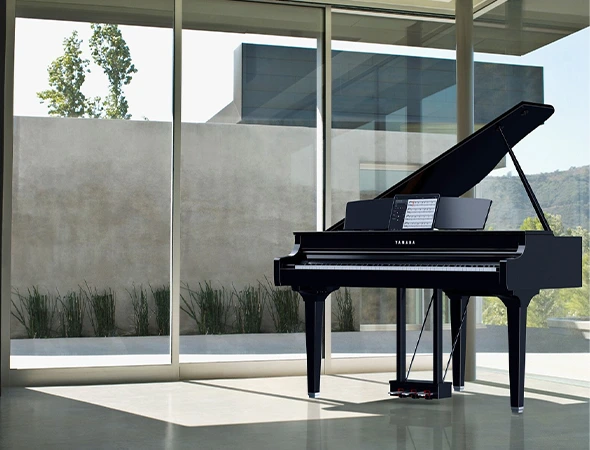
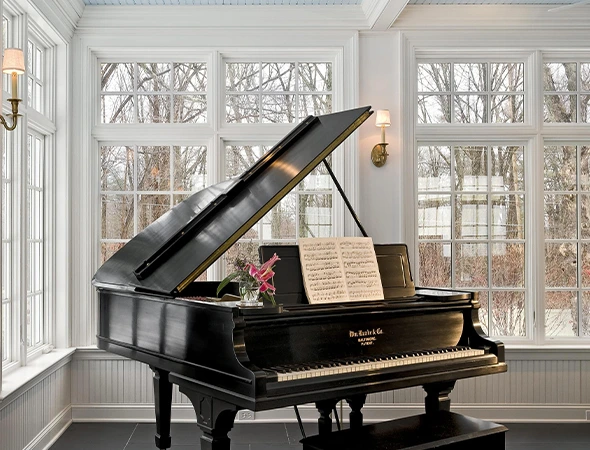
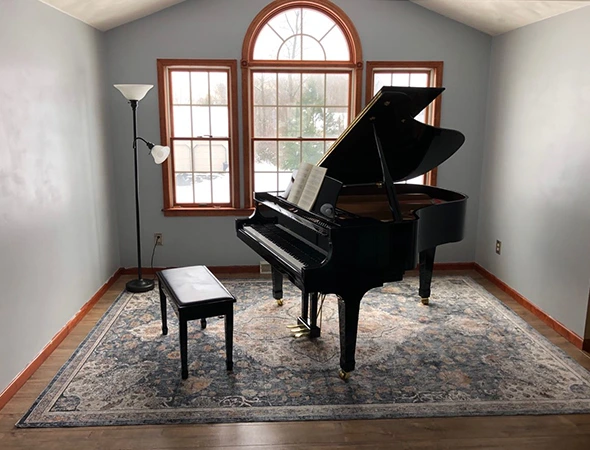
Baby grands and concert grands use the same basic grand-action principles, but each model has its own specifications and feel. My regulation work follows the requirements of your particular piano rather than one set of numbers for every grand. A small grand doesn't need to be made to feel like a concert instrument.

Piano Tuner

Smooth keys don't help much if the chords they play are out of tune. Tuning keeps the strings at pitch so the even touch you've regained is matched by clean harmony. During tuning visits, I can also notice when the action is beginning to drift again.
Benefits Of Choosing My Grand Piano Regulation Service

Choosing Bay Piano Tuner for regulation brings these practical gains:

  • Rebuilding Experience: My rebuilding background helps me understand complex action problems.
  • Individual Attention: I regulate the action according to your piano’s design and condition.
  • Player-Focused Adjustments: I pay attention to how the action feels under your fingers.
  • Full-Keyboard Work: A complete regulation addresses the action across the keyboard, not just problem notes.
  • Careful Inspection: I identify worn or damaged parts that may need attention before regulation.
  • Practical Recommendations: I’ll explain what your piano needs and what can wait.

Work Process

How the Regulation Process Unfolds

Here is what a regulation visit looks like from your side of the bench.

You Play First

A few minutes at the keyboard shows me where the touch bothers you, such as fast repeats, soft notes, or uneven keys. Mentioning any piece that feels harder than it should also gives me useful information about what you notice while playing.

Action Comes Out

On a grand, the keyframe and action can be removed from the case so I can reach the relevant adjustment points. The dampers remain in the piano and are regulated separately.

Reinstall and Play

Once the action is back in place, I finish the remaining adjustments and have you play the passages that originally felt difficult. Your hands are the real test of whether the changes have produced the response you were looking for.

Piano Touch Regulation in Palo Alto, CA

Quiet playing is where a loose touch can reveal itself. If a soft note sometimes fails to sound, or a key has a small dead spot before anything happens, the action may have developed lost motion, a gap between the key and the parts it lifts. Near the bottom of the stroke, you should also feel the action release at the appropriate point rather than encountering an excessive or poorly defined aftertouch.

I correct lost motion by adjusting the relationship between the key, capstan, and action components so the hammer responds without unnecessary delay. I also set let-off and aftertouch so the release point is reliable without making the key feel vague. Once those relationships are properly adjusted on your grand in Palo Alto, soft passages should respond more predictably to your fingers.

Grand Piano Repetition Adjustment in San Mateo, CA

Rapid repeats are one of the strengths of a grand piano because its action allows a key to restrike before it has fully returned to its starting position. When that mechanism falls out of adjustment, repeated notes can drop out, trills become uneven, or a hammer may bounce and double-strike. Quick passages often reveal the problem first.

Repetition work in San Mateo involves several linked settings that I adjust as a group. Drop controls how far the hammer falls after it releases, while checking distance determines how the backcheck catches the hammer on its return. I also adjust the repetition springs for reliable reset without making the action unnecessarily resistant or causing the hammers to creep upward. The exact settings depend on the action and its condition, so I work from the piano’s specifications rather than forcing every grand to the same measurements.

Piano Key Leveling in Redwood City, CA

A wavy line of keys is easy to spot once you know what to look for. Crouch at one end of the keyboard and sight along the fronts of the white keys. Some may sag, a few may sit high, and the black keys may wander too. Those height differences can make some notes feel shallower or deeper than others, which can affect evenness during scales and repeated passages.

Each key can be lifted from its position so I can adjust the paper-thin punchings at the balance rail and bring the key heights into proper relationship. The sharps are leveled as their own group because they sit at a different height. If your Redwood City piano has older, compressed punchings, I may replace them rather than continuing to stack material on top. Once the keys are level, the remaining regulation adjustments can be made from a more consistent starting point.

Grand Piano Damper Regulation in Atherton, CA

A clean finish to each note is part of good touch, too. Release a key on a well-regulated grand and the sound should stop cleanly. If it hums, buzzes, or fades slowly, the damper may not be settling squarely on its strings. Leftover ringing can blur staccato and muddy rests. The highest treble notes are the exception because they are designed without dampers and ring freely.

Timing is the other half of my damper work. Each damper should begin lifting at the appropriate point in the keystroke, so I adjust its lift point, height, and contact with the strings. Lifting too early can add resistance near the beginning of the keystroke, while lifting too late can interfere with the note’s response. Atherton grands with a middle pedal also get my attention there, since the sostenuto mechanism needs to hold the intended dampers without affecting the others.

Before You Book a Regulation

That depends mostly on how much the piano is played and how demanding that playing is. A grand used for teaching or hours of daily practice will generally need attention sooner than one played occasionally. Rather than following a calendar alone, pay attention to how the touch compares with when it was last regulated. If you're unsure, I can inspect the action and tell you what I find.

It can if friction, lost motion, or other action problems are making the keys feel heavy or sluggish. Regulation doesn't change the fundamental weight built into the keys, which comes from factors such as lead weights, friction, and the action's design. If the keys still feel too heavy or too light afterward, that may point to a different type of adjustment. Telling me how your touch compares with pianos you enjoy also helps set expectations.

Ready for a Smoother Grand Piano Touch?

Before booking, share your grand’s make, approximate age, and when it was last regulated, if you know. The quickest route is a call or text to (650) 438-8334, and email reaches me directly at crh@ichaz.com.

Call: (650) 438-8334
Email: crh@ichaz.com

Send A Message

About Bay Piano Tuner

Grand piano regulation at Bay Piano Tuner focuses on the mechanical relationships that determine how the action responds under your fingers. My experience with complete piano rebuilds gives me a detailed understanding of how the keys, action, hammers, dampers, and related components work together. I approach each piano based on its condition, specifications, and how you want it to feel when you play.

Regulation Visits Across These Communities

Since regulation is done at your piano, the towns below are close enough to my San Carlos base for this kind of detailed work. Each is also a town I cover for tuning, repair, and voicing visits.