
Piano Pitch Correction in Palo Alto, CA for a Stable Starting Point
Has your piano slipped flat after a few years without a tuner? I’m Chaz Hawley, and through Bay Piano Tuner, I bring Palo Alto pianos toward standard pitch when the instrument can safely support it, then fine-tune them for a stable result. Grands, uprights, and older instruments are all welcome. Calls come straight to me, not a front desk.
Get in touch
Bringing Palo Alto Pianos Back to Standard Pitch
Palo Alto is a short trip south of my San Carlos base on 101 or 280. That puts homes in Professorville, Old Palo Alto, Crescent Park, College Terrace, Midtown, and Greenmeadow within easy reach.
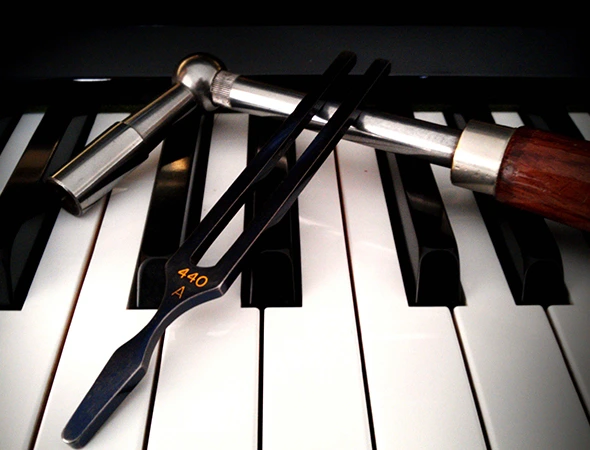
Pitch correction, sometimes called a pitch raise, brings the piano’s overall pitch closer to A440 before the fine-tuning begins. Here are the situations that usually lead people to call me:
- A family piano that went untuned for several years and now sits well below standard pitch
- An instrument that came with a house in Crescent Park or Professorville
- A grand moved into a Greenmeadow Eichler from a different climate
- A practice upright in a Midtown or College Terrace home where a child is starting lessons
I started my own business in the 1970s, and I’ve rebuilt and refinished many grands since, including Steinway, Bechstein, and Bösendorfer. I’m also one of the few technicians who work on square grands and birdcage uprights from the 1800s. An heirloom piano in an older Palo Alto home is work I’m glad to take on.
Our Services
Piano Care I Offer Across Palo Alto
Pitch correction is often the first step, but many pianos need more once they’re back at pitch. Bay Piano Tuner covers the full range of care, so one call handles it all.
Piano Technician
A technician visit looks at the whole instrument, not just the strings. Sticking keys, buzzing notes, and squeaky pedals all get checked. Small faults like these often show up during a pitch raise. I'll explain what I find in plain terms before any extra work starts. You decide what gets done and when.

Piano Repair Services
Broken parts, worn action pieces, and damaged keys can make a piano frustrating to play. Repairs range from quick fixes to full restoration. Over the years my work has included rebuilding and refinishing fine grands. Vintage and antique piano restoration is part of that experience too. Whatever shape your piano is in, there's usually a path forward.

Piano Voicing Service
Voicing shapes the tone of each note by working on the hammers. A piano can be perfectly in tune and still sound harsh or dull. Bright, glassy notes in a room full of glass and hard floors are a common complaint. Through careful voicing, I even out the color of the sound from bass to treble. The goal is a tone you enjoy hearing every day.

Grand Piano Regulation
Regulation adjusts the action so every key responds the same way. Over time, felt compresses and parts drift out of alignment. Players notice it as uneven touch, keys that repeat poorly, or a heavy feel. With my adjustments, the action becomes predictable again. Students and serious players both feel the difference right away.
Piano Tuner
Routine tuning keeps a corrected piano from sliding back down. Each pass sets the strings so intervals sound clean together. Grand pianos and upright pianos both get the same careful attention. Regular visits from me also catch small problems early. A steady tuning schedule protects the investment you've made in the instrument.
Benefits of Choosing Bay Piano Tuner Locally
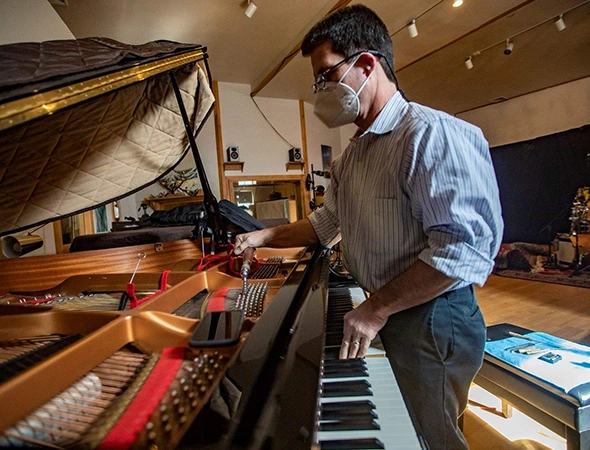
- Unhurried visits: I generally spend at least two hours on a tuning. That time goes into accuracy and stability.
- Text-friendly scheduling: A text to the same number works when a phone call doesn’t fit your day.
- Weekend availability: Saturday and Sunday slots fit around school and office schedules.
- One consistent technician: The person you talk to is the person who shows up at your door.
- Full-service skills: Problems spotted during pitch work can be repaired by the same hands, with no extra referral.
- Any make welcome: I work with pianos across different ages, brands, and conditions, and I’ll explain any limitations I find.
Pitch Correction Built for Palo Alto Home Styles
Your home’s design shapes how your piano sounds. Postwar ranch houses and Eichler homes fill Greenmeadow and Midtown, while Professorville holds some of the city’s earliest houses. Each style puts its own strain on a piano. My work brings it back to sounding right in the room where it actually lives.
- Eichler living rooms: Radiant floor heat and walls of glass warm the piano unevenly, so some sections drift more than others. A full pitch correction pulls every section back together, and your chords ring clean again.
- Rainy winters, dry summers: Seasonal moisture pushes pitch up in the wet months and drags it down when things dry out. Correcting the pitch and then keeping a steady tuning schedule stops that sour cycle, so the piano sounds good all year.
- Years between tunings: A piano left alone for years often drifts noticeably below its intended pitch. Once I raise it to standard pitch, you can play along with recordings, other instruments, and lesson books without anything sounding off.
You don’t need to figure out what your house is doing to your piano. That’s my job. Call or text to book a visit, and enjoy a piano that sounds the way it should.
Palo Alto Housing Facts That Affect Piano Pitch
Palo Alto’s current Housing Element describes the city as built-out, with very little vacant land left to develop. The same report estimates that about 61 percent of the city’s 26,161 housing units are single-family homes. For your piano, that most likely means life in an established house, where drafts and shifting room temperatures pull it off pitch year after year.
A pitch correction resets the instrument, so lessons, practice, and family playing sound right again. I’ll raise the pitch first, then fine-tune the piano so it holds. Call or text me at (650) 438-8334, and I’ll find a time that suits you, weekends included.
What Clients Say About My Work
If you're looking for a piano tuner who is extremely knowledgeable, responsive and professional, Chaz is your guy! He did a fantastic job at tuning my old piano plus fixing a lot of sticking keys which were not so responsive anymore. He is so tenacious at solving problems, trying different ways to fix issues until we got the best results. After tuning and fixing, my piano sounds like a real gem, I highly recommend Chaz to anyone in the bay area who wants to entrust their piano with someone who really knows the ins and outs of this instrument and will respond to all your needs very promptly.
Chaz was fantastic! He was responsive to text regarding scheduling and was prompt to the arranged time, even calling to let me know he was on his way. He explained everything he was doing and even repaired a broken string on the fly, and you can't even tell it had been replaced as it matched the existing strings perfectly. He adjusted the hammer on a second broken string and got it aligned well enough that for our purposes we don't need to replace it. He then took his time tuning, and the piano sounds fantastic. He gave honest answers about the maintenance required and the issues unique to our piano. Highly recommended!
Standard Tuning or Pitch Correction for Your Piano
Not every piano needs a pitch raise. A piano that’s been tuned within the last year can usually go straight to a fine tuning. One that’s been left for years needs its overall pitch brought up first, or the tuning won’t hold. Here’s how the two compare:
| Parameter | Standard Tuning | Pitch Correction Plus Tuning |
|---|---|---|
| Starting point | Close to A440 | Well flat or sharp of A440 |
| Tuning passes | One fine pass | Rough raise, then fine pass |
| Afterward | Holds until the next routine visit | Settles, so a follow-up is often wise |
| Best for | Pianos tuned within about a year | Pianos skipped for several years |
| Typical Palo Alto case | A family upright played daily in Midtown | An inherited grand in an Old Palo Alto home |
Not sure which one your piano needs? Describe its history when you call, and I’ll tell you what to expect before the visit.
Pitch Correction Questions From Palo Alto Piano Owners
If it hasn't been tuned in two or more years, it may need a pitch raise, especially if it has fallen well below standard pitch. Playing along with a recording or another instrument and sounding noticeably lower is another strong clue.
Pianos drift unevenly as strings relax over time. Some sections fall further than others, so chords start to sound sour. A large pitch gap generally calls for a pitch-raising pass before the final tuning, rather than trying to correct the entire difference in one fine-tuning pass. Bringing the pitch up first and tuning afterward gives a far more stable result.
For most older pianos, yes. Very old or rusted strings carry some risk of breaking under added tension, so it's worth sharing the piano's age and history before the work begins.
Many older instruments around town were built with quality materials and hold up well. The condition of old strings and other structural components is a more important consideration when raising pitch. Knowing the piano's background helps set the right approach. My experience with square grands and birdcage uprights from the 1800s means older instruments don't catch me off guard.
Once corrected, the piano will be much closer to its intended pitch, although a substantial pitch change can settle afterward. A follow-up tuning helps lock in the new pitch.
Strings and the soundboard need time to adjust to higher tension. Some drift in the first months is normal, especially through a seasonal change. Once the piano settles, routine tunings keep it steady. Good placement away from heat, sun, and drafts can also support more stable tuning.
Yes. I do work on weekends, which helps families whose weekdays fill up with school and work. Call or text (650) 438-8334 to find a time that fits.
Weekend slots can fill up, so reaching out early helps. Texting is often the easiest way to settle on a day without phone tag. Share your neighborhood, the type of piano, and roughly when it was last tuned. With those details, I can plan the visit properly.
Many technicians suggest tuning at least once a year. After a pitch correction, an earlier follow-up visit is often a good idea while the piano settles.
Pianos played daily, used for lessons, or kept in rooms with big temperature swings may benefit from more frequent visits. Homes with radiant floors or large windows fall into that last group. Regular care can reduce the chance of letting the piano drift far enough to require another substantial pitch correction.
Book Your Palo Alto Pitch Correction Visit Today
Ready to hear your piano at its proper pitch again? Call or text Bay Piano Tuner at (650) 438-8334, or email crh@ichaz.com. I’m based in San Carlos and serve Palo Alto and nearby Peninsula cities.
Call: (650) 438-8334
Email: crh@ichaz.com
Send A Message
Other Peninsula Cities I Visit for Piano Work
My work isn’t limited to Palo Alto. From my San Carlos base, I travel to neighboring cities for piano tuning, piano repair, voicing, and grand piano regulation. Many clients book one service and add another as their needs change. Here are the nearby areas I cover: